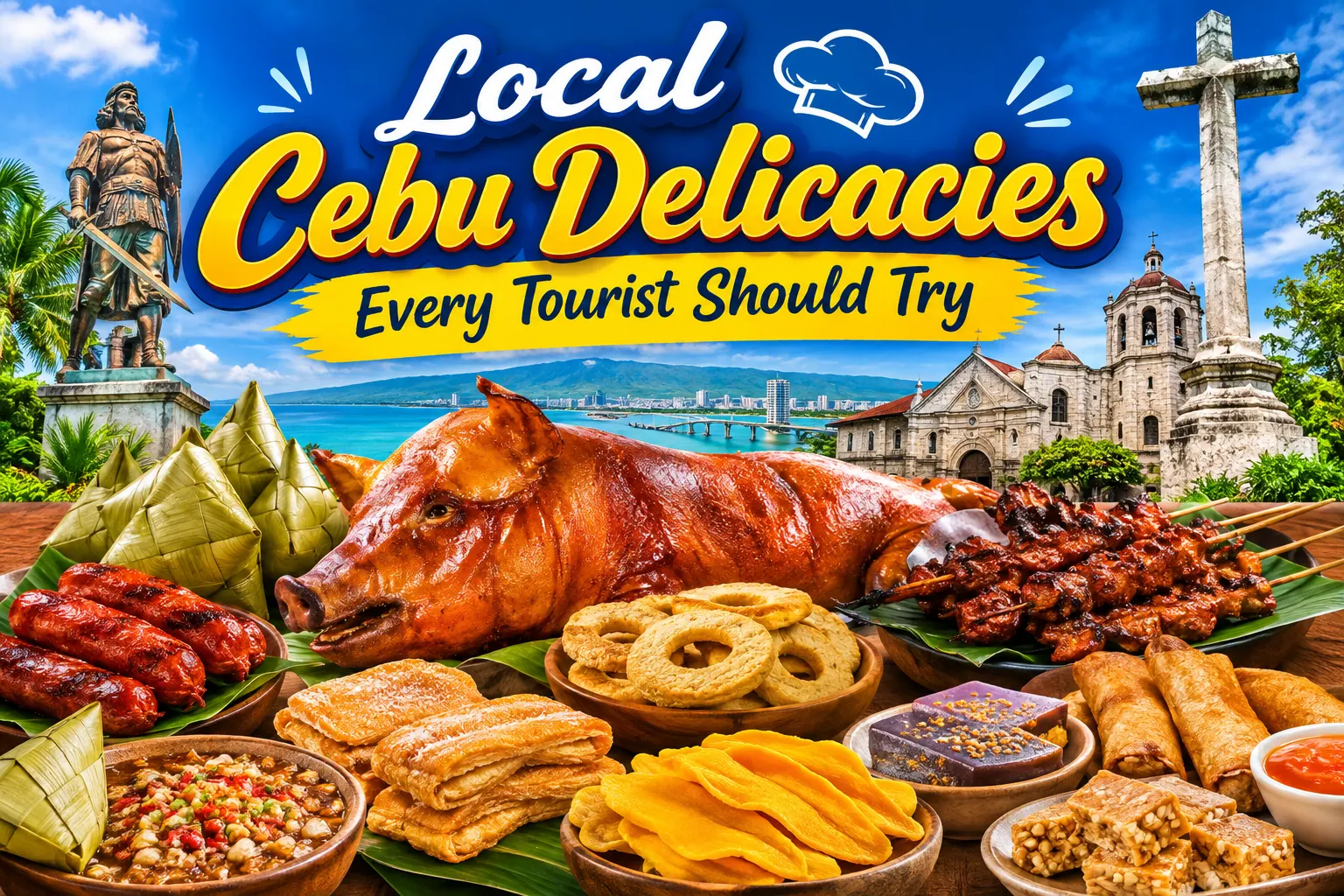

If there’s one thing that makes a trip to Cebu unforgettable, it’s the food. Known for its rich history, beautiful beaches, and vibrant culture, Cebu is also home to some of the Philippines’ most beloved dishes and local treats.
From famous roasted pork to sweet delicacies enjoyed with coffee, Cebu offers tourists plenty of opportunities to taste the island’s unique flavors. Whether you’re visiting for the first time or returning for another adventure, these local Cebu delicacies deserve a spot on your food itinerary.
1. Cebu Lechon
No Cebu food trip is complete without trying Cebu lechon.
Lechon is a whole roasted pig traditionally prepared for celebrations, gatherings, and special occasions. Cebu-style lechon is especially famous for its flavorful meat and crispy skin. Unlike versions that rely heavily on sauces, Cebu lechon is often seasoned with herbs and spices before being slowly roasted until the skin becomes golden and crunchy.
For many locals and visitors, the best part is the contrast between the crispy skin and tender, flavorful meat.
Tourist tip: Try it with steamed rice and a serving of the flavorful liver-based sauce—or enjoy it the Cebuano way, where the lechon is flavorful enough to eat on its own.
2. Puso - Cebu’s Hanging Rice
You’ll often see small diamond-shaped packets of rice hanging from food stalls and restaurants around Cebu. This is puso, also known as hanging rice.
Puso is rice wrapped in woven coconut leaves and boiled until cooked. Its compact shape makes it convenient to carry and eat, which is why it has become a popular companion to grilled meats, lechon, and other Filipino dishes.
For tourists, trying puso is more than simply eating rice—it’s also a chance to experience a distinctly Cebuano food tradition.
3. Chorizo de Cebu
If you enjoy sweet and savory flavors, Chorizo de Cebu is a must-try.
This Cebuano-style sausage is known for its sweet, garlicky, and slightly smoky flavor. It is commonly grilled and served with rice, making it a popular breakfast or meal option.
The caramelized exterior that develops while grilling gives the sausage an irresistible aroma and flavor.
Best enjoyed with: Puso, fried egg, and a cup of hot coffee.
4. Ngohiong
Ngohiong is one of Cebu’s popular street-food snacks and is particularly loved by locals looking for an affordable but flavorful bite.
It is made with a savory filling wrapped in a thin spring-roll-like wrapper and deep-fried until crispy. The dish is often served with a sweet and spicy dipping sauce.
Ngohiong is perfect for tourists who want to explore Cebu beyond the usual restaurant dishes and experience the island’s casual street-food culture.
5. Tuslob-Buwa
For a truly unique Cebuano food experience, try tuslob-buwa.
The name roughly refers to dipping or dunking into a bubbling mixture. The dish traditionally involves a savory sauce made with ingredients such as sautéed aromatics and pork-based components. Diners dip pieces of puso directly into the bubbling mixture.
Tuslob-buwa is not just about the taste—it’s about the experience of sharing food and enjoying a traditional Cebuano-style meal with friends or family.
6. Masareal
For something sweet, masareal is one of Cebu’s classic delicacies.
Masareal is a soft, sweet treat traditionally made from ground peanuts and sugar. It has a smooth, slightly crumbly texture and a rich peanut flavor.
It is commonly purchased as a pasalubong, making it a great souvenir for friends and family back home.
7. Otap
Another popular Cebuano pasalubong is otap, a thin and flaky puff pastry covered with sugar.
Its crisp layers and mildly sweet flavor make it an excellent snack with coffee or tea. Otap is also easy to pack, making it one of the most convenient Cebu delicacies to bring home after a trip.
8. Dried Mangoes
Cebu is famous for its dried mangoes, which have become one of the Philippines’ most recognizable food products.
Made from ripe mangoes that are sliced and dried, the result is a chewy, sweet, and fruity snack. Some varieties have a slightly tangy flavor that balances the sweetness.
Dried mangoes are widely available in supermarkets, souvenir shops, and stores throughout Cebu, making them an easy choice when looking for something to bring home.
9. Rosquillos
Rosquillos are ring-shaped Filipino cookies associated with Cebu.
These crunchy, lightly sweet biscuits are perfect for snacking and are another popular pasalubong option. They pair particularly well with coffee, hot chocolate, or tea.
Their simple appearance may be deceiving—the crisp texture and subtle sweetness make them surprisingly addictive.
10. Ampaw
Ampaw is a traditional Filipino rice-based snack that can be found in Cebu and other parts of the Visayas.
Usually light, crunchy, and sweet, ampaw is a nostalgic snack for many Filipinos. It’s another simple treat worth trying if you want to explore traditional local flavors beyond Cebu’s more famous dishes.
11. Cebu-Style Barbecue
Cebu’s food culture is also deeply connected to grilling.
From pork barbecue and chicken to grilled seafood, barbecue stalls can be found throughout the city and surrounding areas. The smoky aroma, sweet-savory marinades, and freshly grilled meat make Cebu barbecue a favorite among locals and tourists alike.
Pair your barbecue with puso for the classic Cebu street-food experience.
12. Calamay
Calamay is a traditional Filipino sweet made primarily from glutinous rice, coconut milk, and sugar.
It has a thick, sticky consistency and a rich coconut flavor. Depending on the preparation, calamay can vary in sweetness and texture, but it remains a favorite traditional delicacy in the Visayas.
It’s worth trying if you enjoy Filipino desserts with a strong coconut and caramel-like flavor.
A Food Adventure Worth TakingCebu is more than beaches, mountains, historical landmarks, and beautiful sunsets. Its food tells a story about the island’s culture, traditions, and people.
From the legendary Cebu lechon and smoky barbecue to crunchy otap, sweet masareal, and refreshing dried mangoes, every delicacy offers visitors another way to experience Cebu.
So the next time you visit the island, don’t just explore its tourist attractions. Eat like a local, discover hidden food spots, and bring home a little taste of Cebu.
After all, the best travel memories aren’t always found in photographs they’re sometimes found in the flavors you remember long after the trip is over.